

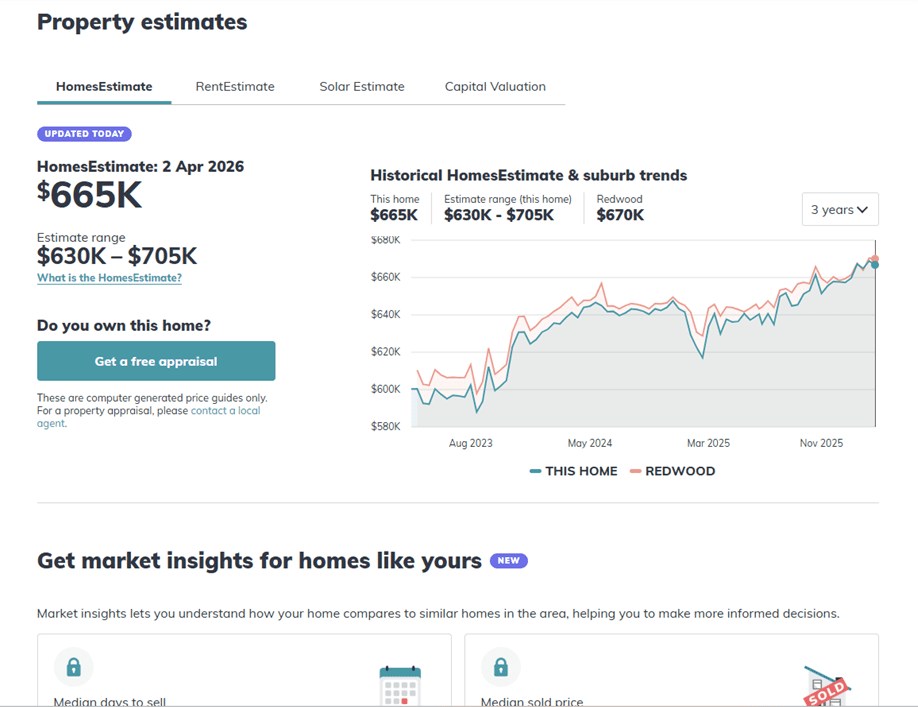
Online house price estimates have been around for years on sites such as QV. Previously, access required an account, but in recent years these estimates have been quietly integrated into major real estate portals, making them visible to all users.
You may have noticed them on platforms like Trade Me, Realestate.co.nz, or OneRoof. While they may seem harmless, they can subtly derail a marketing campaign.

Online Estimate vs Comparative Market Appraisal
Prior to listing your property for sale, your salesperson must complete an appraisal of your property. This is a detailed analysis of recent sales data and current market conditions, providing a likely market price range. A Comparative Market Appraisal (CMA) outlines how your property compares to those recently sold, and often forms the foundation for your marketing strategy.
Online estimates, by contrast, are generated by algorithms. They typically rely on broad data points such as:
- Council rates valuations
- Historical sales data in the area
- General property characteristics (age, size, bedrooms, land area)
- Broad market trends
The issue is that these algorithms cannot account for the nuances that truly influence a property’s value, including:
- Current market sentiment, which can shift quickly
- Property-specific features (e.g. renovations, school zoning)
- Timing and seasonal factors
- The motivations of individual buyers and sellers
Council valuations, in particular, can be misleading. They are updated infrequently and represent a snapshot of the market at a specific point in time. In a changing market – whether rising or falling – they can quickly become outdated. They also do not account for improvements or chattels, not even basic items like flooring or light fittings.

How this can impact your campaign
When a property is marketed without a price, such as through a deadline sale, buyers don’t simply wait for clarity. Instead, they turn to the information available to them, including online estimates.
We see this play out in real scenarios. When an online estimate sits $50,000-$100,000 above the true market expectation, enquiry can drop away. Without clear price guidance, buyers form their own conclusions and may dismiss the property before making contact or coming along to an open home.
Conversely, when an estimate is well below true market value, open homes may attract strong attendance, but often from the wrong audience. Many attendees are simply not in a position to purchase at the true price level, resulting in wasted time for both buyers and sellers. This can also create a false sense of demand.
What sellers can do
The solution isn’t necessarily to abandon deadline sale or specific marketing strategies, but to provide clearer guidance to the market:
- Add price indications to your marketing.
Even with a deadline sale, including a price guide helps buyers assess whether they are in the right range and ensures you attract a more relevant audience. - Understand the difference between CV and market value.
A council valuation is a rating tool, not a reflection of current market value. Work with your salesperson to set realistic expectations based on up-to-date market evidence, and ensure this is communicated to buyers. - Monitor your online listings.
Check how your property is presented across major portals. If automated estimates appear inaccurate, discuss ways to provide clearer direction to buyers. - Choose your marketing method carefully.
Deadline sales and auctions can be highly effective in the right conditions. However, in a more cautious market, strategies such as price by negotiation or a fixed asking price may generate stronger, more qualified enquiry.
The fix isn’t complicated—it’s about ensuring the signals your listing sends to the market are clear and aligned. If you’re considering selling and would like to discuss how to position your property effectively, the Irelands team would be happy to help.